Beyond the Classroom: How Study Abroad Develops Real-World Skills
Through immersive, real-world learning, students build adaptability, cultural competence, and the confidence to navigate diverse professional environments.
Key take-aways:
- Adapt to new environments and think independently
- Communicate effectively across cultures
- Gain global perspective and career-ready skills
Write your awesome label here.
Studying abroad is more than just an opportunity to travel it is a powerful way to develop skills that are highly valued in today’s global job market. As workplaces become increasingly interconnected, employers are looking for individuals who can adapt, communicate across cultures, and think critically in diverse environments. A study abroad experience helps students build exactly these competencies.
One of the most important skills gained is adaptability. Living in a new country often means navigating unfamiliar systems, languages, and cultural norms. Students quickly learn how to adjust, solve problems independently, and remain flexible qualities that are essential in fast-changing professional environments.
Write your awesome label here.
Another key benefit is cross-cultural communication. Interacting with people from different backgrounds improves the ability to listen, understand different perspectives, and communicate clearly. These skills are especially valuable in multinational organizations and roles that require teamwork across borders.
Study abroad also strengthens confidence and independence. Being away from one’s usual support system encourages students to take initiative, make decisions, and manage responsibilities on their own. This level of self-reliance often translates into stronger leadership potential in the workplace.
In addition, students develop global awareness and critical thinking. Exposure to different educational systems, societal structures, and ways of life broadens their perspective and helps them approach problems with a more open and analytical mindset.
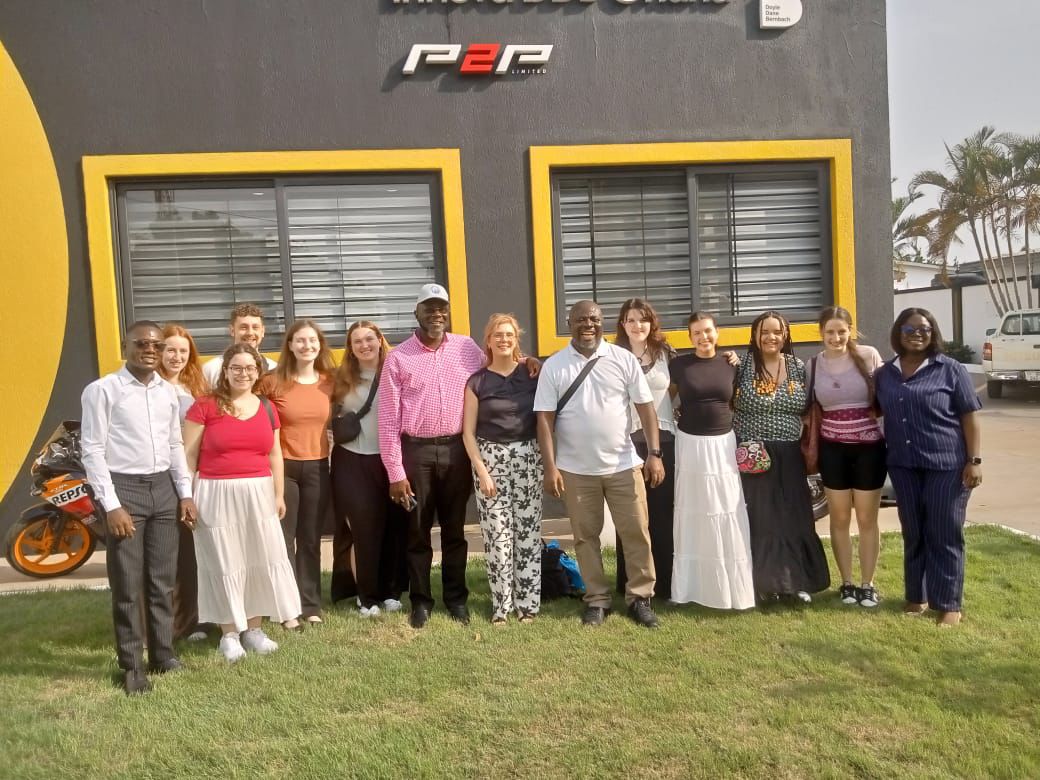
Finally, studying abroad enhances a student’s professional profile. It signals to employers that the individual is proactive, culturally aware, and capable of thriving outside their comfort zone. Many students also gain international networks, internships, or volunteer experiences that further boost their employability.
In conclusion, studying abroad equips students with practical, real-world skills that go beyond academic knowledge. It prepares them not just for a job, but for a successful and dynamic career in a globalized world.
Henry Nyanyui A.T.K Azanu, BA
Operations Manager, Ghana
Henry is the operations manager for Ghana at the Global Engagement Institute, with over a decade of experience in operations, communications and experiential program support. He brings a background in public relations and journalism supporting ethically grounded global learning through strong local partnerships and program coordination.
Henry Nyanyui A.T.K Azanu, BA
Operations Manager, Ghana
Henry is the operations manager for Ghana at the Global Engagement Institute, with over a decade of experience in operations, communications and experiential program support. He brings a background in public relations and journalism supporting ethically grounded global learning through strong local partnerships and program coordination.
Henry Nyanyui A.T.K. Azanu, BA
Operations Manager, Ghana
Recommended other articles
Explore our Engineering Programs
Solutions for universities

COPYRIGHT © 2026 GLOBAL ENGAGEMENT INSTITUTE. ALL RIGHTS RESERVED.